Departmental training Programme for Office Superintendent and Section Officers
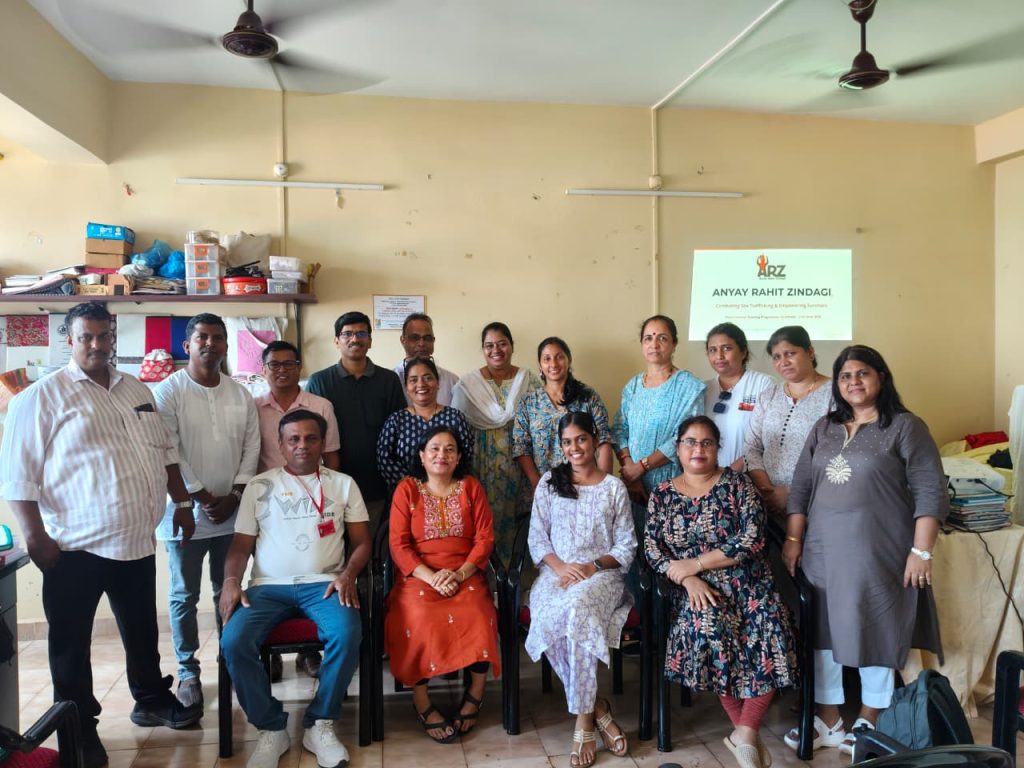
On 17th June 2026, ARZ hosted an interactive orientation and field visit at its WISH office in Vasco, Goa, from 11:00 AM to 1:00 PM. Organized as part of a GIPARD training initiative, the session aimed to sensitize a cohort of fifteen civil servants—comprising Office Superintendents and Section Officers from various state departments—on the ground realities of Commercial Sexual Exploitation (CSE) and survivor rehabilitation.
Unpacking the Reality: The Mukti Model and Systemic Challenges
The session commenced with a comprehensive presentation unpacking the structural mechanics of human trafficking. ARZ highlighted that CSE operates as an organized crime relying on highly lucrative, secretive networks continuously fueled by client demand and profit-driven intermediaries.
The presentation walked the officers through the psychological stages of a victim’s journey—moving from intense Resistance, into survival-driven Adaptation, and finally to a state of internal resignation or Acceptance caused by intense stigmatization.
Data specific to the Goa context underscored the magnitude of the issue:
- An estimated 10,000 individuals are engaged in commercial sexual activities in the state.
- The illicit trade generates an approximate daily revenue of 10 Crore INR within Goa alone.
- Demographically, rescued victims in Goa comprise 59.6% Indian nationals (spanning states like Goa, Uttar Pradesh, Maharashtra, and West Bengal) and 40.4% foreign nationals (primarily from Nepal, Kenya, Bangladesh, and Uganda).
- High-traffic commercial hospitality spaces (hotels, lodges, and guest houses) represent the primary venues for physical abuse, accounting for 43 reported cases.
The briefing also emphasized the legal framework provided under the Immoral Traffic (Prevention) Act (ITPA), 1956, outlining the intersectional roles of the Police, Magistrates, Protective Homes, and supportive NGOs in handling searches, safe intermediate custody, and rehabilitation.
Rebuilding Lives: A Guided Tour of WISH Upstream Solutions
Following the presentation, the civil servants were given a guided walkthrough of the WISH (Women’s Initiative for Self Help) facilities located right inside the office premises. The officers observed the functional setups designed to deliver permanent economic exits for survivors:
- The Tailoring Unit: Where survivors repurpose damaged materials and revive traditional handwork, translating broken elements into beautiful, marketable goods.
- Swift Wash Laundry Services: An industrial-scale facility where the literal and symbolic process of cleansing serves as an active medium for psychological healing and trauma recovery.
- Paper Products Production Area: Where survivors gain technical skill sets, manufacturing high-quality paper goods to secure financial independence and sustainable livelihoods.
Reflections and Action: The Feedback Session
The program concluded with an open feedback session where the civil servants shared that they were deeply impressed by WISH’s sustainable livelihood units for fostering financial independence. The experience significantly deepened their understanding of the complex psychological trauma and structural barriers survivors navigate during recovery. Moving forward, the officers brain-stormed actionable ways their respective departments could assist, suggesting options like incorporating WISH-manufactured products into government procurement channels and strengthening cross-departmental labor and welfare safety nets.