Restoring Dignity and Hope: MILAAP State-Level Consultation on Cross-Border Repatriation
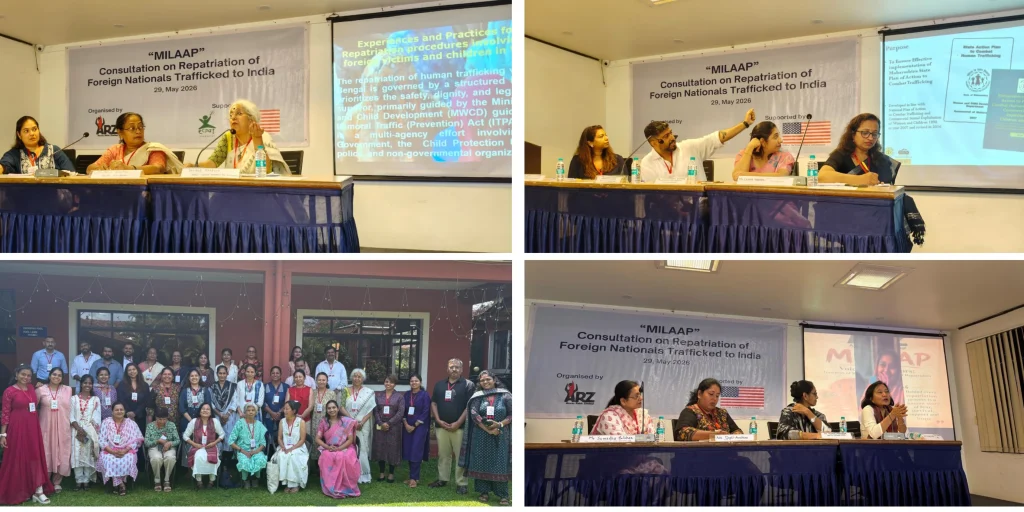
Arz recently organized “MILAAP,” a state-level consultation dedicated to strengthening and streamlining the repatriation processes for foreign victims of human trafficking rescued from exploitation. Held at the ICG in Goa and facilitated by Mr. Arun Pandey and Ms. Juliana Lohar from Arz, the consultation served as a unique collaborative platform to address the complex operational and structural dimensions of cross-border rehabilitation and reintegration.
Moving Beyond Administration to True Reunion
The word MILAAP means “Reunion,” signifying the ultimate objective of the repatriation process: the safe, dignified, and respectful return of survivors to their families and home communities. The consultation brought together a diverse range of 35 key stakeholders—including law enforcement, anti-human trafficking units (AHTUs), immigration authorities, the Foreigners Regional Registration Office (FRRO), Child Welfare Committees, government shelter homes, and civil society organizations. Discussions centered around a critical shift in perspective: viewing trafficked persons through a protection lens rather than treating them as immigration offenders.
Learning from Regional Realities: Goa, Maharashtra, and West Bengal
The core of the consultation featured three thematic panel discussions, mapping out distinct regional insights and field experiences:
- The Goa Experience: Ms. Juliana Lohar from Arz presented historical data showing that between 2020 and 2025, the organization rescued 152 victims of trafficking, including 30 foreign nationals from Kenya, Bangladesh, Nepal, Uganda, Bhutan, and Uzbekistan. Law enforcement and shelter perspectives were shared by Ms. Nutan Verenkar (AHTU, North Goa) and Ms. Sumedha Belokar (Apna Ghar), highlighting operational struggles such as escort shortages, funding constraints, and communication delays.
- The Maharashtra Framework: Representatives including Ms. Leena Jadhav (Rescue Foundation), Mr. Nilesh Shinde (SLATCU), and Ms. Nishigandha Bhawal (Navjeevan State Protective Home) highlighted interstate coordination and institutional care. They underscored the deep psychological impact of prolonged waiting periods on survivors and emphasized the necessity of robust psychosocial support, counselling, and vocational training.
- The West Bengal Paradigm: Veteran practitioners Ms. Tapoti Bhowmick (Sanlaap) and Ms. Baitali Ganguly (Jabala) traced the historical evolution of formal repatriation mechanisms, discussing standard operating procedures (SOPs), changing trafficking patterns during the COVID-19 pandemic, and the utilization of technology in rescue operations.
Charting the Way Forward
The consultation concluded with a unified call to action to address systemic barriers and prevent re-trafficking. Moving forward, the participating stakeholders collectively advocated for:
- Streamlined Protocols: Developing standardized repatriation protocols, timeline controls, and faster embassy coordination for nationality verification and travel documentation.
- Dedicated Resource Pools: Establishing localized emergency funds to facilitate immediate repatriation and safe escort arrangements.
- Continuum of Care: Expanding post-return monitoring, economic empowerment, and sustainable livelihood support so that repatriation does not end at the physical border crossing.
Our Commitment to Survivor-Centred Justice
Arz and its partner networks collectively reaffirm that cross-border repatriation must always prioritize the fundamental rights, safety, and long-term well-being of survivors. By fostering stronger inter-agency and bilateral collaboration, we remain committed to ensuring that every rescued survivor can return home with the dignity and security they deserve.